


Grist: A common talking point about climate change gets it all wrong, new study says
By Kate Yoder - Common wisdom says that the average person doesn’t care about climate change because they think its effects will unfold in the far-off future or in faraway places. While this approach feels right, its success has been “vastly overestimated,” according to a study published in the journal One Earth on Friday.
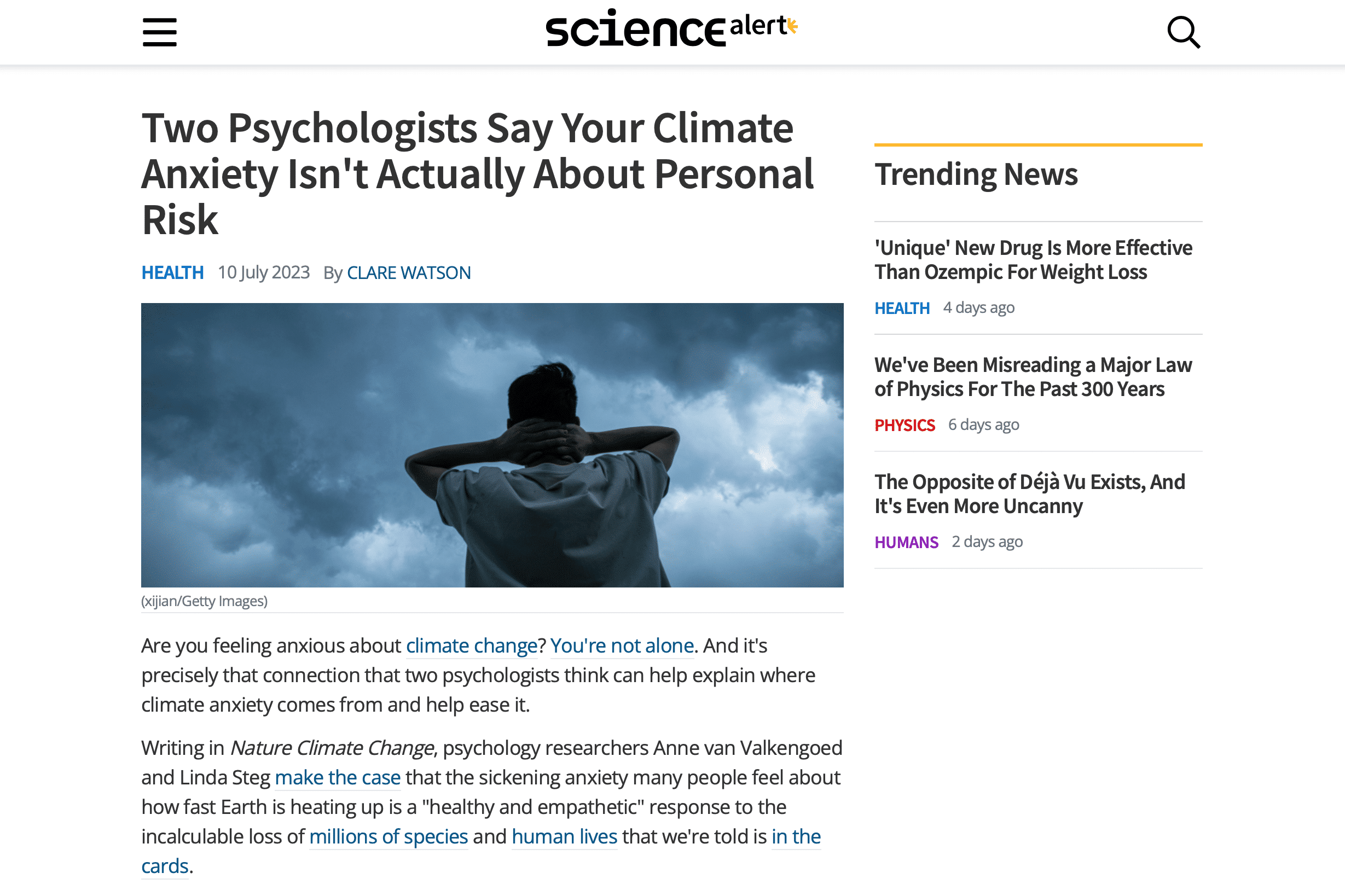
ScienceAlert: Two Psychologists Say Your Climate Anxiety Isn't Actually About Personal Risk
By Clare Watson - Are you feeling anxious about climate change? You're not alone. And it's precisely that connection that two psychologists think can help explain where climate anxiety comes from and help ease it.
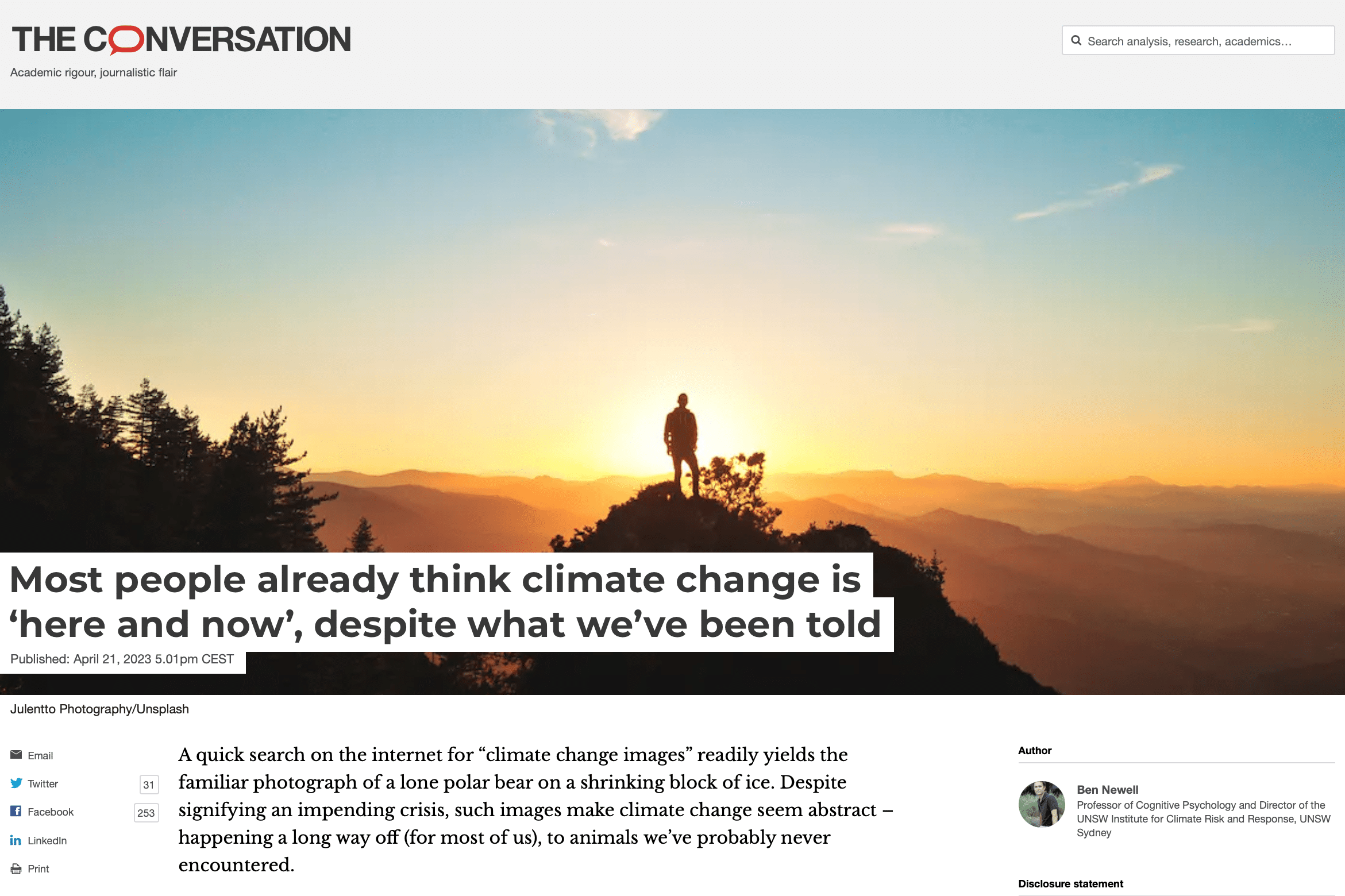
The Conversation: Most people already think climate change is ‘here and now’, despite what we’ve been told
By Ben Newell - The idea that climate change is perceived as “psychologically distant” – happening in the future, in distant places, to other people or animals – has long been presented as a major barrier to action on climate change. Despite the intuitive appeal of this idea, new research published today in the journal One Earth by behavioural scientists at the University of Groningen now challenges it.
Psychology Today: Transilience: A New Way to Think About Climate Change
By Grant Hilary Brenner - Given the impact of climate change not only on physical health and safety, but also mental health and well-being, continuing to study how we approach climate change is a matter of basic utility. As grim as the situation is, the human capacity to confront and transcend challenges is formidable. Environmental psychologists Nasi, Jans, and Steg (2022), in the Journal of Environmental Psychology, ask the titular question, “Can we do more than ‘bounce back’?”, proposing the concept of “transilience.” Transilience goes beyond resilience to include not only the capacity to avoid negative outcomes and accommodate change, but also to “persist, adapt flexibly, and positively transform in the face of climate change risks.”
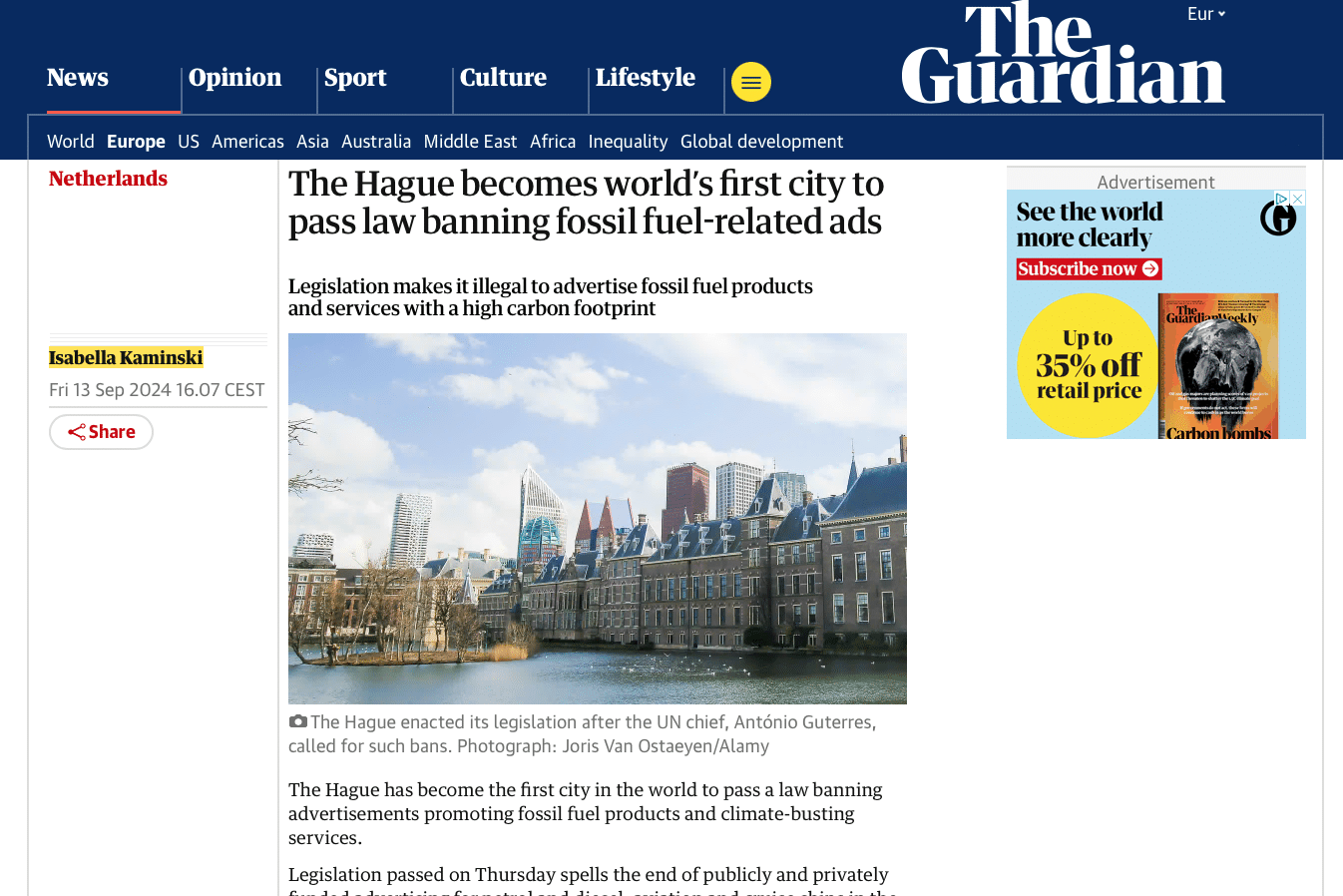
The Hague becomes world’s first city to pass law banning fossil fuel-related ads
By Isabella Kaminski - The Hague has become the first city in the world to pass a law banning advertisements promoting fossil fuel products and climate-busting services. Legislation passed on Thursday spells the end of publicly and privately funded advertising for petrol and diesel, aviation and cruise ships in the streets of the Dutch city, including on billboards and bus shelters. It takes effect from the start of next year.
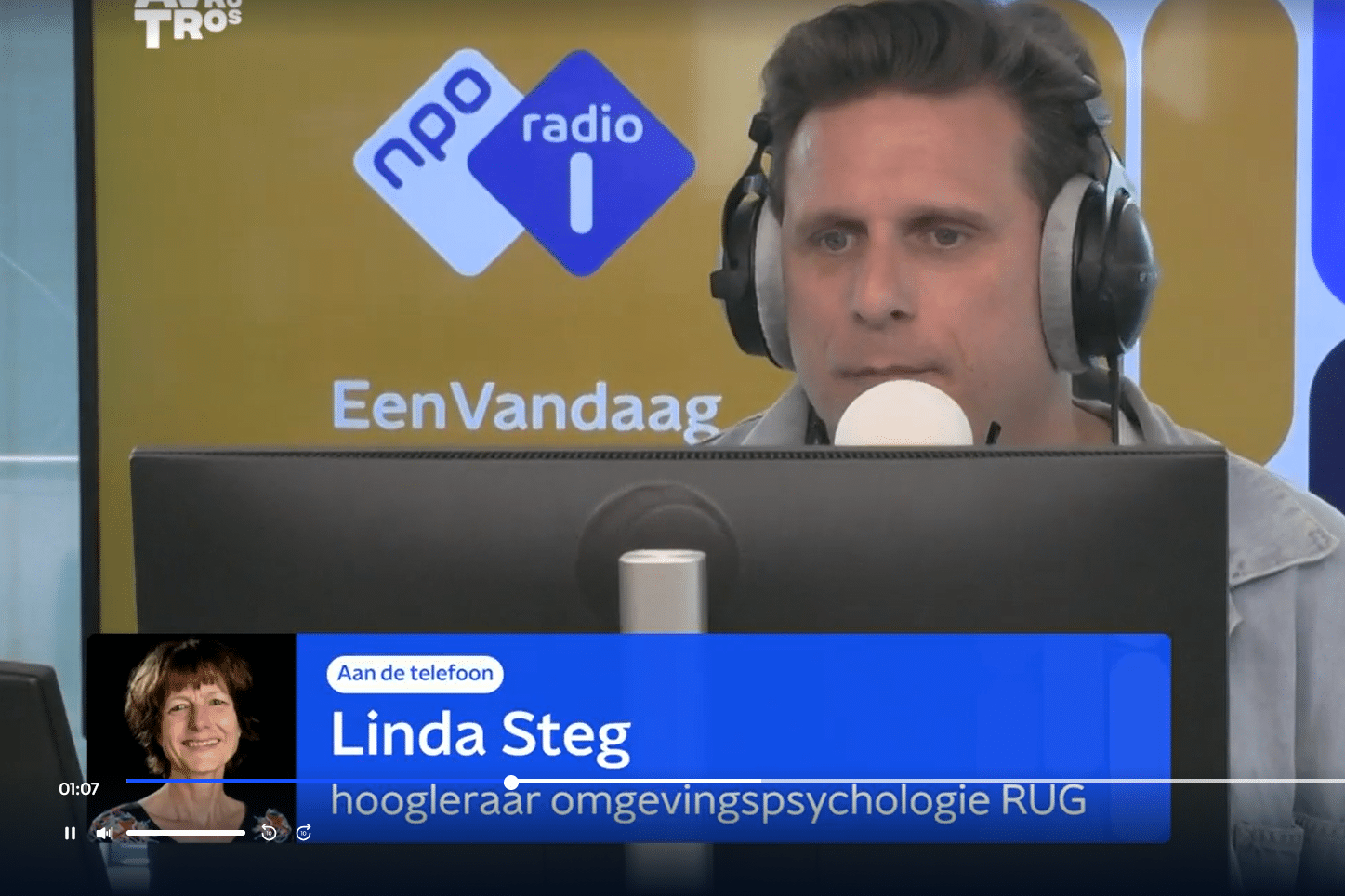
EenVandaag: Hoe krijg je draagvlak voor het klimaatbeleid?
Mensen willen wel verduurzamen, maar het moet wel eerlijk verdeeld worden. Dat is de conclusie van een nieuw SCP-rapport. Als dat gevoel er niet is, ondermijnt dat het draagvlak voor het klimaatbeleid. Hoe krijgen we de schouders weer onder het klimaatbeleid? Dat vertelt hoogleraar omgevingspsychologie en lid van de wetenschappelijke klimaatraad Linda Steg.
Trouw: Politici denken (onterecht) dat klimaatbeleid impopulair is
Door reactie Trouw - Klimaatdoelen halen zonder gedragsverandering zal erg moeilijk zijn. We kunnen veel uitstoot besparen door ons bijvoorbeeld anders te verplaatsen en ons dieet aan te passen. De verantwoordelijkheid daarvoor ligt alleen niet bij individuen, zegt Linda Steg, hoogleraar omgevingspsychologie.

De Nacht Van: Hoe komen we van de 'wegwerpmaatschappij' af?
Door Ruben Rosen Jacobson - Hoe hardnekkig is het probleem van de wegwerpmaatschappij, en wat is de rol van de consument hierin? Daarover spraken we met Ellen van der Werff, universitair hoofddocent omgevingspsychologie aan de Rijksuniversiteit Groningen.

ROMagazine: Hoe je de burgerbetrokkenheid bij klimaatbeleid vergroot
Door Goda Perlaviciute, Lorenzo Squintani and Yvonne de Kluizenaar - Veel mensen voelen zich onvoldoende betrokken en gehoord bij de ontwikkeling van klimaatbeleid. Het meenemen van perspectieven van alle groepen in de ontwikkeling van beleid is daarom cruciaal. Hoe je de burgerbetrokkenheid vergroot en alle perspectieven meeneemt, onderzochten ze bij de Rijksuniversiteit Groningen en het SCP. Ze zetten de belangrijkste bevindingen op een rij.

Gedragsverandering onmisbaar voor CO2-neutraal Nederland
Het Planbureau voor de Leefomgeving rekende door hoe Nederland in 2050 klimaatneutraal kan zijn. Waardevol, maar wel met een grote omissie, vinden wetenschappers Goda Perlaviciute, Thijs Bouman en Linda Steg: het effect van gedrag en leefstijl is niet meegerekend.