
Values like the importance of listening to citizens, and to each other, engaging everyone, and ensuring that polluters pay emerged over the months of meetings by the 175 participants in the Dutch National Climate Citizens’ Assembly.
Not coincidentally, that was the Dutch assembly’s goal: to explicitly focus more on what the participants think of as fair and what matters to them instead of expecting them to play the role of technical experts.
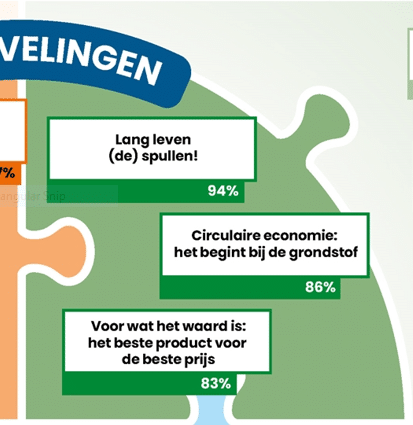
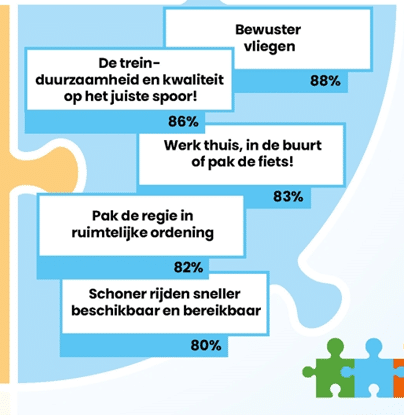
The participants voted on value statements to go into the final recommendations, and they were sorted into four categories: stuff, travel, food, and general. Statements that received at least 75% of votes in favor were included in the report which was presented to the Dutch government on Monday, 1 December.
Here’s what they recommended:
Stuff:
Long live the stuff! (94%)
Circular economy: it starts with the raw materials (86%)
For what it’s worth: the best product for the best price (83%)
 Travel:
Fly more consciously (88%)
Trains: sustainability and quality on the right track (86%)
Work from home, in the neighborhood or commute by bike (83%)
Take control over spatial planning (82%)
Make clean driving more available and accessible sooner (80%)
 General:
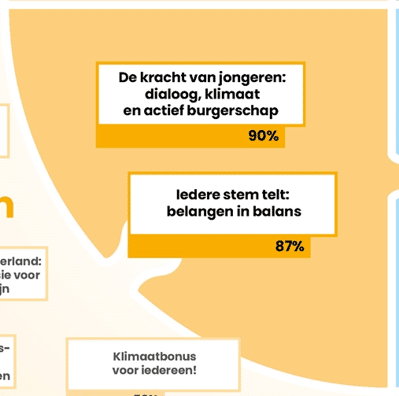
The power of the youth: dialogue, climate and active citizenship (90%)
Every voice counts: balanced interests (87%)
 Food:
Food:
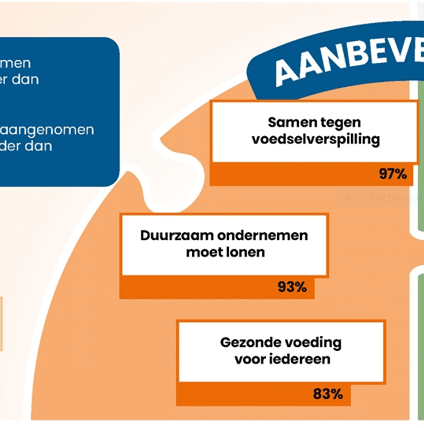
Work together to prevent waste (97%)
Sustainable business pays (93%)
Healthy food for everyone (83%)
Our colleague professor Goda Perlaviciute was in attendance this week as representatives from the Nationaal Burgerberaad Klimaat presented their recommendations to the current cabinet members. Professor Perlaviciute was part of the scientific board for the assembly due to her extensive research on citizens’ assemblies.
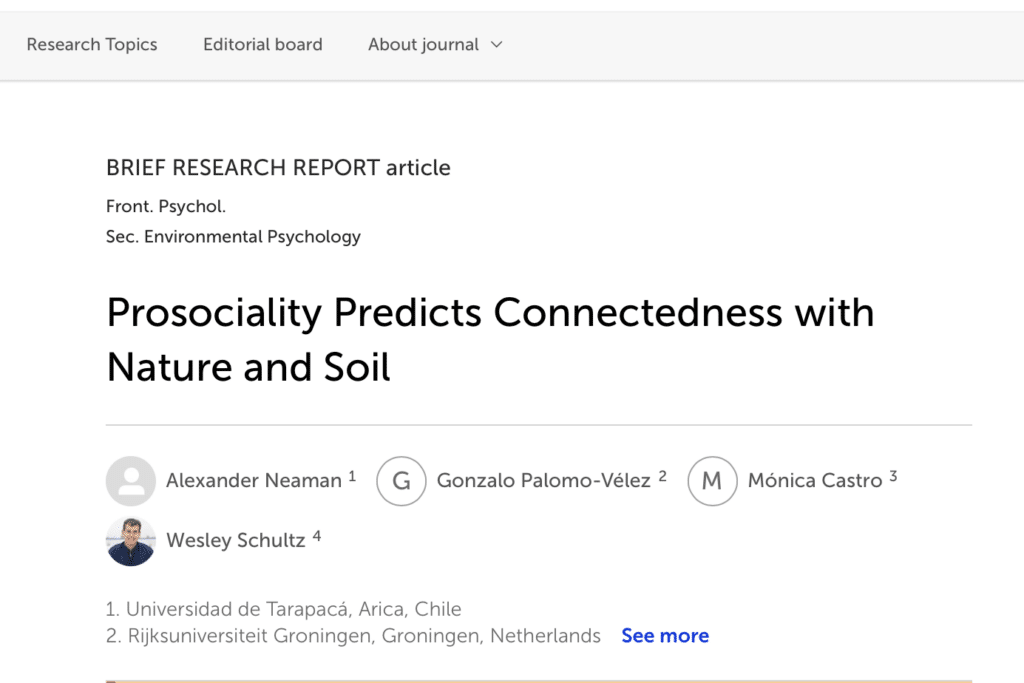
In a 2024 paper, she proposed that private citizens should be seen as experts on their own values, which means that participants in such assemblies don’t have to be scientific specialists to be able to have a say. So far, around 20 climate-focused citizens assemblies are known that have been held across Europe and North America, many of which have taken different approaches to what they ask of the participants and what kind of results they are looking for.
For example, the remit of the French citizens’ convention on the climate tasked participants with “defining measures and submitting laws, regulations and referendums on climate action… to achieve a cut in greenhouse gas emissions” by at least 40%. In her paper with Wytse Gorter and Gabriel Muinos, professor Perlaviciute wrote that this task may not have been very well suited to a citizen assembly, since such laws and regulations would require “technical knowledge and expertise that ordinary citizens may not have.” In their paper, the authors proposed that citizen assemblies would better serve as “a way to bring forward lay people’s concerns, values, beliefs, and preferences—a unique knowledge that politicians and experts might otherwise not have.”
The Dutch assembly’s recommendations were presented to the current demissionary government on Monday, 1 December, and the six-month assessment period clock starts ticking now. With new coalition meetings being held this month, the incoming cabinet members will be the ones evaluating the assembly’s findings.
An urgent role remains for the general public: people living in the Netherlands can sign a declaration of support, collectively showing that millions of people beyond the 175 in the assembly agree with their recommendations, and want the national government to follow through on them.
Anyone who wants to sign the declaration of support can do so here: Online steunverklaring | Burgerberaad klimaat